Why Concert Programmes Put Works in an Order
Concert programme order can turn a list of works into a listening journey, using contrast, continuity and pacing to shape how each piece lands.
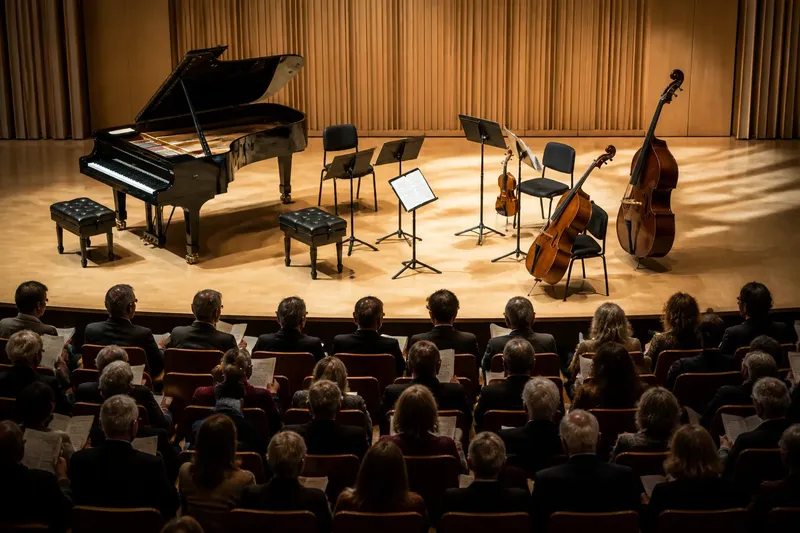
Concert programme order changes what listeners hear in each work: a hushed opening can make a bright, forceful piece feel newly vivid, while a shared musical color can make separate works seem connected. A programme is not just an inventory of pieces; its sequence gives the audience a path through them. Here are eight ways to shape that path without forcing every work into a grand narrative.
Begin with an invitation
- Choose an opening that welcomes attention. The first work has to do more than start the music. It gives people a moment to settle, learn the room’s character and understand the evening’s energy. A concise, clear opening can be especially helpful when the audience is still finding its seats or adjusting to an unfamiliar ensemble.
- Set the first work beside the room. Consider what listeners can see and hear before the first note: the scale of the ensemble, the distance between performers, the acoustics and the general atmosphere. A solo line may make a resonant hall feel intimate; a full ensemble may establish a broad, immediate sound. Neither is automatically better. The useful choice is the one that makes the room feel like part of the experience rather than an obstacle.
- Give a demanding opening a clear reason. A challenging or unusual work can begin a concert if its first impression offers a foothold: a strong pulse, a striking timbre or an evident musical question. If the piece asks listeners to absorb several unfamiliar ideas at once, a more direct opening may help them settle before the programme turns toward denser material. This is not a judgment about the work’s worth; it is a decision about the audience’s first point of contact.
Shape the contrast
- Use contrast to refresh the ear. Successive works need not be alike to belong together. A lively, rhythmically driven piece after a slow, sustained one can reset the audience’s attention, while a smaller ensemble after a large one can make quiet detail newly noticeable. The contrast works best when listeners can register the change rather than struggle to follow an abrupt shift with no room to breathe.
- Vary more than volume. A programme can change character through texture, register, rhythmic motion, instrumental color or musical density. If every transition is simply “quiet, then loud,” the sequence may feel predictable. Consider what changes from one work to the next: a steady pulse giving way to flexible phrasing, a blended sound giving way to sharply outlined parts, or a familiar instrumental combination giving way to an unexpected one.
- Keep an emotional turn legible. A bright work next to a somber one may create a useful tension, but the connection should not depend on an explanation listeners cannot hear. A shared motif, an adjacent sound world or a clear change in scale can help the transition make sense. Program notes can offer context, yet the order should still have an audible logic for someone who reads none of them.
Build a connection
- Let a musical thread travel. Works can connect through a recurring instrument, a related rhythm, a common source of inspiration or a similar approach to melody. The link may be subtle; it need not be announced as a theme. When planning, describe the connection in plain language and ask whether a listener could notice at least one part of it in performance. If the answer is no, the relationship may belong in a note rather than carrying the sequence.
- Place the explanation where it helps. An audience does not need a paragraph of context before every piece. A short introduction can point out a relation that might otherwise pass unnoticed, such as a shared dance rhythm or a change in how two composers treat the same instrument. Keep the spoken cue focused on listening. It should open a door, not prescribe what everyone is supposed to feel.
- Use a recurring sound as a hinge. A timbre that appears in two works can make their differences easier to hear. For instance, imagine a chamber concert that moves from a work featuring muted strings to one where a solo violin cuts through a broader ensemble. The programmer might place them next to each other so listeners can notice how the same family of sound shifts from blended color to clear foreground. The expected result is an audible comparison, not a claim that the works share a single meaning.
Give the evening a shape
- Think about the whole arc. A programme can gather momentum, alternate between concentrated and expansive works, or move from spare textures toward a fuller sound. The arc need not follow a plot. It can simply give the evening a perceptible sense of direction, with each work contributing a different kind of energy.
- Place the interval with care. The break divides the evening and affects what listeners carry into the second half. Ending the first half with a self-contained work can give the audience a natural pause; opening the second half with a contrasting sound can help attention return. Avoid making the interval do all the structural work. The programme should feel coherent on both sides of it as well as across the whole concert.
- Protect the final impression. The last work is not required to be the loudest or longest. A compact, vivid ending may leave more room for reflection than an extended climax, while a broad final work can make sense if the programme has prepared for that scale. Ask what kind of attention the ending invites: release, stillness, surprise or a sense of completion. Then make sure the preceding work does not already deliver exactly the same effect.
Make transitions playable
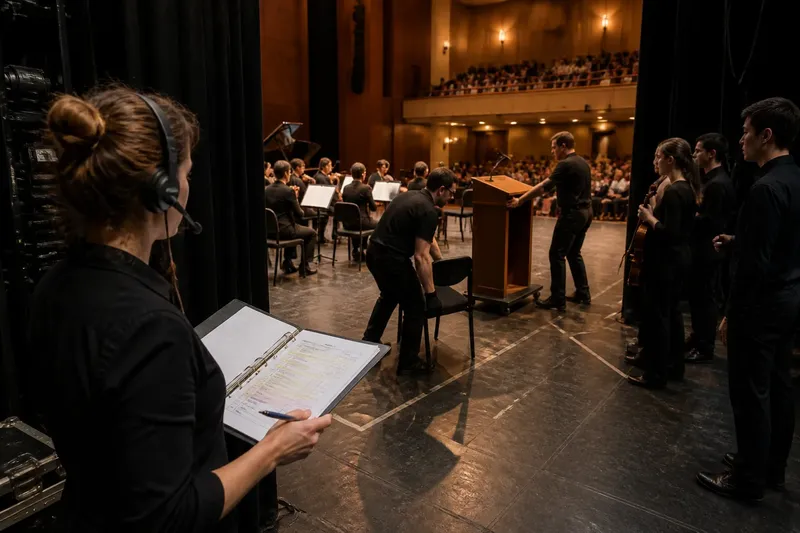
- Account for the changeover. A sequence exists on paper, but performers and crew have to carry it out. A change in seating, stands, instruments or stage layout can affect the pace between works. Confirm the practical requirements with the people responsible for the production, then consider whether the transition leaves enough room for the audience to shift attention. This is not a substitute for a separate running order; it is a way to check that the artistic sequence can be delivered comfortably.
- Keep applause in the design. A quiet ending may lead to a pause before applause, while a vigorous finale may draw an immediate response. If two works are intended to connect without applause between them, the performers need a clear shared understanding of that choice. Otherwise, the audience may be left uncertain about whether to respond or wait. The programme can support the intended flow, but the spoken introduction, performance convention and stage behavior should not contradict one another.
- Don’t chase perfect symmetry. It is not worth bending a work into a tidy pattern simply because the programme looks balanced on the page. Equal-length halves, mirrored moods or a neat sequence of sound categories can be satisfying, but they are secondary to musical sense and workable transitions. If a strong connection requires an awkward stage reset or leaves a piece feeling misplaced, choose a simpler order.
What should the order answer?
Should the most familiar work come first?
Not by default. A familiar piece can help listeners settle, but placing it later may give it a fresh context after they have heard less familiar sounds. Choose the position that best supports the evening’s opening and the work’s role in the sequence.
Can unrelated works share a programme?
Yes, if the shifts between them feel intentional and the concert has enough variety to hold attention. A useful connection can come from contrast itself, such as a change in scale or musical texture, rather than from a shared subject.
How much explanation belongs in the programme notes?
Offer enough to make a meaningful link easier to hear, but leave room for listeners to form their own response. A concise note about a shared instrument or rhythmic idea is often more useful than a long account of what the sequence is supposed to mean.
Should the printed programme explain every transition?
No. The order can make its own case through sound, and too much explanation can distract from listening. Explain a connection when the context genuinely helps; let straightforward changes remain straightforward.
Review the sequence aloud
- Read the programme from the audience’s perspective. Look at the work titles in order and ask what expectation each one creates for the next. Then listen to excerpts or consult the performers’ understanding of the repertoire if that is part of the planning process. The purpose is not to predict a single audience reaction, but to catch places where the proposed connection exists only in the planner’s notes.
- Check that each position earns its place. For every work, finish the sentence “Here, this piece…” with a concrete reason: it opens the sound world, creates a contrast, carries a thread, changes the scale or gives the evening a particular close. If several works receive the same vague explanation, the sequence may need another look. The answer can be simple, but it should be specific enough to guide the choice.
Before the programme is printed, say its sequence aloud and imagine moving from one work to the next in the room. That small check can reveal an evening whose connections are audible, whose contrasts have space to land and whose order serves both the music and the people listening.